Tuesday, October 28, 2014

Swimming Pool Increases Landlord's Duties of Care


Might a landlord have extra liability if he rents out a property that includes a swimming pool? Most of us would probably answer yes, and we would be right. But just how far do the landlord's duties extend? Well, how about a duty of care to protect the minor children of the tenant's guests? The point is clearly made in a California case filed earlier this year. (Johnson v. Prasad, Third Appellate District, Feb. 25, 2014)
The Prasads purchased a home with a backyard swimming pool in 2000. The pool was built in 1976 or 1977. It complied with state and local ordinances at the time. (Subsequently, California adopted the Swimming Pool Safety Act which requires a variety of pool safety measures; but it only applies to pools built or remodeled after January 1, 2007) The Prasads did nothing to change the pool. A six-foot fence prevented entry into the backyard. The only access from the house to the pool was through the kitchen. There was a sliding glass door with a security gate over it. The gate did not have a self-closing mechanism.
The property was managed by a Century 21 firm since 2009. In June of 2009 the property was rented. The lease called for the landlords to maintain the pool. The lease provided that the landlords or their service provider would have access for such maintenance purposes.
The tenants had a party on June 28, 2009. Among the guests were Andre Soucy, his four-year old son, Allen, and Allen's grandmother and grandfather. There were a number of other people, including children.
According to the court record, "They all went in the pool. Eventually, everyone got out. The grandmother went inside the house and did not close the security gate or the sliding glass door behind her because others were still coming in. At some point, the grandmother lost track of Allen. As it turns out, Allen had gone outside the house to the backyard. When he was discovered, he was at the bottom of the pool."
Allen died. It was a tragic situation, indeed, and one that ultimately turned into a lawsuit. Allen's mother filed a wrongful death suit alleging the grandmother and father were negligent in supervising Allen, the homeowners (the Prasads) were negligent in failing to properly fence the pool or otherwise protect a child from accidentally falling into the pool, and Century 21 was negligent in failing to ensure that the property met safety code. She did not sue the tenants.
The Prasads and Century 21 moved for summary judgment -- essentially, dismissal -- which the trial court granted. Among the things the court said, "the pool was not a ‘nuisance' or an unreasonably dangerous condition of the property"; "nothing these defendants did or failed to do created any type of dangerous condition or in any way contributed to this accident"; there was no evidence that it was more likely than not that the conduct of the [Prasads] and Century 21 was a cause in fact of the drowning; and "even the security gate and sliding door could not have been involved in this action since they were left open on purpose."
Case decided? No, the plaintiff appealed. And the Appellate Court disagreed with the trial court as to whether or not the landlords owed a duty of care to the child. The court noted that "In determining a duty's existence and scope" consideration of several factors is called for. The foreseeability of harm and the extent of the burden [to prevent it] "are ordinarily the crucial considerations.
The court reasoned that it was foreseeable to the landlords that children would be on the property and that "children would approach the pool, regardless of their capacity to swim, thus exposing themselves to the danger of drowning." The foreseeability of harm factor was there.
The Appellate Court also noted that the defendants did not violate the Swimming Pool Safety Act. Nonetheless, the Court also said, "the existence of this statute informs the extent of burden to the homeowners [Prasads] and consequences to the community of imposing a duty to exercise care with resulting liability for breach." Hence, the court seemed to reason, even though the law did not require that the landlords comply with the act (i.e. adding safety features), its very existence suggests that they might have a duty to do so.
Having established in its own mind that the landlord's did have a duty of care to the child, the court then turned to the question of whether that duty was breached. That, the Appellate Court said, was a matter for a jury to decide. "A jury could conclude a reasonably prudent homeowner should have taken further precautions because it was foreseeable that a child could still access the pool and could drown or be injured. Or it could decide the opposite. Where reasonable minds could differ, it was error for the trial court to decide that question as a matter of law."
So, the case against the landlords has been sent back to trial.
As to Century 21, the Appellate Court upheld the trial court's ruling. Century 21 could not have been negligent in failing to determine that the premises met safety code, because the only safety code at issue exempted those premises. At least that part of the Appellate ruling made sense.

Saturday, October 11, 2014

FEMA Providing Lifeline To Those Suffering From August Flooding


Depending on the type of damage, homeowners could receive up to $32,000 in grant money -- money that goes towards fixing your home and doesn’t have to be paid back, even if your home is already repaired.
 
If more money is needed, that’s where small Business Assistance Loans come in. All centers will be open from 8 a.m. to 6 p.m. Monday through Saturday, but closed on Sunday.

Residents with losses from the storms and flooding will save time by registering for help from FEMA before going to the disaster recovery centers.

Four disaster recovery centers opened to assist residents of Macomb, Oakland and Wayne counties. The four centers are one-stop shops where disaster survivors can register for assistance, discuss types of disaster assistance programs with specialists, receive the status of their existing application and obtain other information.

Register at www.disasterassistance.gov or via a web-enabled phone at m.fema.gov. Applicants may also call 800-621-FEMA (3362). TTY users may call 800-462-7585. The toll-free telephone numbers will operate from 7 a.m. to 11 p.m. EDT seven days a week until further notice.

The application deadline is Nov. 24, 2014.

 
Disaster recovery center locations:

Macomb County
Renaissance Unity Church
11200 E. 11 Mile Road
Warren, MI 48089

Oakland County
Gerry Kulick Community Center
1201 Livernois Ave.
Ferndale, MI 48220

Wayne County
Wayne County Community College Welcome Center
8200 West Outer Drive
Detroit, MI 48219

Wayne County Community College Education and Performing Arts Center
21000 Northline Road
Taylor, MI 48180


Wednesday, October 1, 2014

LANDLORDS NEED TO TAKE MEASURES AGAINST FORESEEABLE HARM


Landlords have duties to tenants beyond that of providing habitable premises with working heating and plumbing systems, roofs that don't leak, etc. They also must take
reasonable measures to protect tenants from foreseeable harm that might result from conditions on the premises. Such harm includes possible criminal acts.

A decision by California's Fourth Appellate District Court of Appeal includes an instructive discussion of these matters. The case (Vasquez v. Residential Investments) from which the discussion arises has facts that range from mundane to tragic.

Abigail Ramirez and her infant daughter lived with Abigail's parents in an apartment building owned by Residential Investments, Inc. When the family moved in, a glass pane was missing from an arrangement of glass panes on the top half of the door. A piece of cardboard covered the opening. The tenants made a number of requests that the pane be replaced. They felt that its absence created a security risk. After some length of time, Abigail's brother replaced the cardboard with a piece of plywood that he affixed using finishing nails.

Some time later, Abigail, who had recently been living with her boyfriend (the father of her daughter) moved back into the apartment of her parents. Her boyfriend, Jesus Vasquez, who had heard that Abigail had been seeing someone else, came to the apartment armed with a knife. When he was refused entry, he pushed out the plywood piece, reached through the opening and opened the door from the inside. He then killed Abigail.

The lawsuit against Residential Investments was brought on behalf of the infant daughter. It alleged that the owners were negligent by not replacing the missing pane, and that the negligence was a direct and proximate cause of Abigail's death. In defense, the apartment owners argued that property owners have no duty to take precautions against criminal activity that they had no reason to anticipate. The trial court ruled in favor of the defense and granted summary judgment, holding that the incident was not sufficiently foreseeable so as to give the owner's a duty to prevent Vasquez from gaining entry to the apartment.

The appellate court reversed the trial court's decision, and sent the case back for trial. The appellate court did not say that the owner's were, in fact, negligent; but it did say that it was a triable issue, one that a jury should decide on the basis of the facts of the case.

In its discussion the court noted that the law is clear on the point that there is "…a duty by landowners to maintain property in their possession and control in a reasonably safe condition." But then the court went on to acknowledge that this is, at best, a general principle that gives no specific direction. The discussion points out that the determination of duty requires a balancing act in each particular case. A landlord has a duty to exercise reasonable care, but what is reasonable depends on the circumstances, "…considering the foreseeability of the risk of harm balanced against the extent of the burden of eliminating or mitigating that risk."

The court's discussion reviewed a long list of landlord liability cases (the legal landscape is, of course, littered with them). Of particular note was one in which a landlord had failed to fix a lock to a common hallway, thus making it possible for an intruder to enter and rape one of the tenants. 

Although rape had never before occurred on those premises, robbery had. The court held that, even though the foreseeability of a rape occurring might have been slight, the foreseeability of criminal activity was stronger. Moreover, the burden of repairing the lock was minimal. Hence, the landlord had a duty to do so; and the failure to do so constituted negligence. He did not have a duty to guarantee the safety of his tenants, but he certainly had a duty to maintain a "first line of defense."

In this decision a ruling from a Georgia court was approvingly quoted: "The landlord is no insurer of his (or her) tenant's safety, but … is certainly no bystander." 

The moral here for landlords -- fix the locks. And take care of other matters that constitute risks of foreseeable harm.

Thursday, August 7, 2014

Homeowner Claim Who Gets The Claim Check Homeowner Or Mortgage Company?


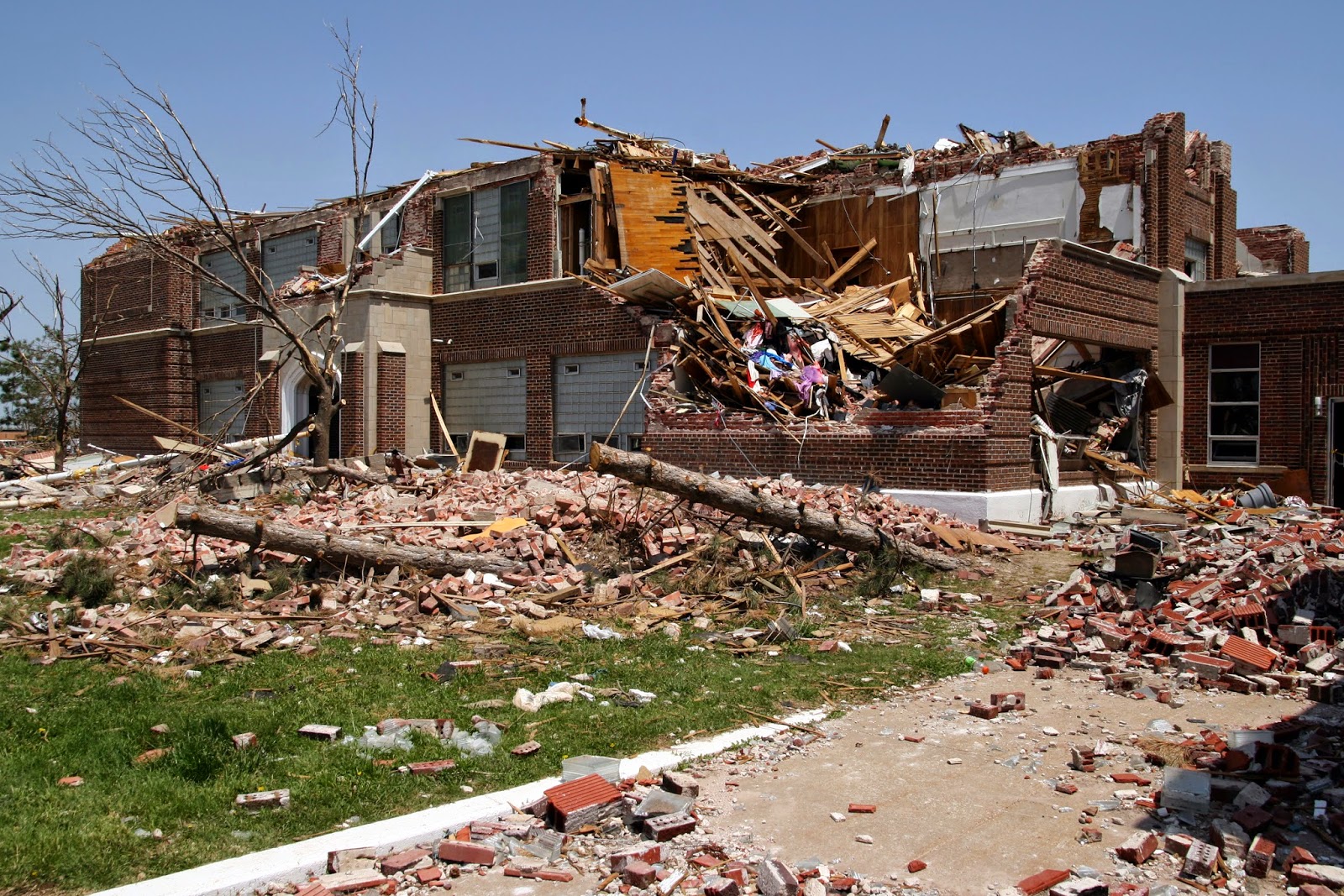
Question: Last year my wife and I purchased a new home. A couple of weeks later, the town where we live was heavily damaged by a tornado, along with strong straight-line winds. Our neighborhood was particularly hard hit with at least two homes totally destroyed. Our house sustained damage as well and we received a fair insurance settlement to make necessary repairs.

We have a mortgage, and the insurance check was made out to us and to the mortgage company. We were informed that the lender would only distribute the insurance proceeds after they receive estimates from contractors and itemized lists of the cost of materials and labor.

Do I have any rights in this matter or does the mortgage company have the legal right to hold the check and only distribute it as it deems necessary? It's a little difficult to get contractors to do repairs when they know they will have to wait on an inspector and then also wait till the lender agrees to send money.

Answer: You have to read your mortgage document carefully. When you went to settlement, you signed two important legal documents: a promissory note and a deed of trust (also called a mortgage). The latter document contains all of the rights and obligations that you, the borrower have to follow.

For example, if you are late with your monthly payments, you are in default. There are sections in the deed of trust spelling out what your lender can do to you, including calling the entire loan due after proper notice to you or ultimately starting the foreclosure process.

Most consumers when they go to the settlement table do not bother to read the deed of trust. It is lengthy (usually 14 or 15 pages), and legalistic. More importantly, since it is a standard form used by the lender, it is almost impossible to change any of the terms. The lender's position is usually: "you want my loan, then sign my legal documents".

One section of the deed of trust is entitled "Property Insurance". Here is a portion of that long section:


Borrower shall keep the improvements now existing or hereafter erected on the Property insured against loss by fire, hazards...not limited to earthquakes and floods... What Lender requires... can change during the term of the Loan...

In the event of loss, Borrower shall give prompt notice to the insurance carrier and Lender... Unless Lender and Borrower otherwise agree in writing, any insurance proceeds ... shall be applied to restoration or repair of the Property, if the restoration or repair is economically feasible and Lender's security is not lessened. During such repair and restoration period, Lender shall have the right to hold such insurance proceeds until Lender has had an opportunity to inspect such Property... Lender may disburse proceeds for the repairs and restoration in a single payment or in a series of progress payments as the work is completed.


Assuming that your deed of trust contains similar language, there is nothing you can do at this point in time. In fact, I have been involved in situations where the lender flatly refused to pay any contractor, and instead credited the entire insurance check against the outstanding balance of the loan.

I am surprised, however, that contractors are reluctant to go forward with your job. There are a lot of good, licensed contractors who are looking for work, and in your case, the money is literally "in the bank".

Your contractor should talk with the lender, so as to be satisfied that payment will be made. While it is true that the payments may be disbursed pursuant to a draw schedule (i.e. when the dry wall is done, you will get XX dollars, and another XX dollars when you complete the electrical work), this is not unusual in home improvement contracts. Indeed, I always recommend that homeowners work out a draw schedule, so that the contractor will only get paid as the work outlined in the schedule is completed.

You were fortunate that you had adequate insurance coverage. Unfortunately, not everyone does. And even if you have coverage (which is required by your lender), have you properly prepared for the next disaster.

There are several steps you should take immediately:

  •  inventory everything in your house; with video or digital cameras, this is quite easy to do;

  •   store copies of your insurance policy with your inventory, but remember to keep them in a safe place, preferably outside of your house.

  •  does your policy include replacement cost or actual cash value for losses?
 
  •   are you in a flood hazard area? Do you have coverage for floods?

  •    have you discussed your coverage with your insurance agent to make sure that you are not over or under-insured?

You must make sure that you are adequate covered -- and prepared.


Monday, May 12, 2014

IU study: Home trampolines cause 1 million ER visits

A new study from an Indiana University School of Medicine researcher finds that from 2002 to 2011, accidents on backyard trampolines accounted for nearly 289,000 visits to emergency rooms for broken bones. Factor in all accidents, not just fractures, and the tally rises to more than 1 million ER visits, according
to the study which published online in the Journal of Pediatric Orthopedics.

"We are inundated with injuries," said Dr. Randall T. Loder, chair of orthopaedic surgery at the IU School of Medicine and the study's lead author. "Kids need to be healthy and active, but this is not the way to do it."

His study, the first to look at fractures related to trampoline use nationwide, found that over 10 years, trampolines caused an estimated 288,876 fractures, at a cost of more than $4 million. Trampoline injuries overall led to more than $1 billion in emergency room visits.

Loder, a surgeon at Riley Hospital for Children at IU Health, decided to do the study after seeing an increase in the number of patients with fractures suffered in backyard trampoline accidents.

The American Academy of Pediatrics has recommended against backyard trampolines since 1999, and many homeowner insurance policies either prohibit them or have a clear exclusion for trampoline injuries.

Still, that doesn't stop parents from purchasing them. Even Carmel personal injury lawyer Jason Reese of the firm Wagner Reese has one in his yard.

Eight years ago he purchased a trampoline for his three kids, now 14, 11 and 9; two years ago he replaced it with a large one he considers safer. He also hires an inspector to check the net once a year.

Strict rules govern the use of the Reese family's trampoline. No more than four kids at a time. A parent must be home. Don't bounce against the safety net. And no one is to go airborne.

Neighborhood kids come over often to bounce, though the Reese family is far from the only one in their neighborhood with a trampoline. His kids use the backyard trampoline almost daily.

The only injuries from their trampoline? A few bloody noses.

"For the most part, like any other parenting thing, it comes down to supervision," Reese said. "You can do it safely."

Still, he's amazed at what he sees in other people's backyards, from trampolines that have no nets, to those that sit on uneven surfaces to trampolines with decaying mats that provide iffy support.

Little surprise that stories about trampoline-related injuries are rife in the suburbs.

According to Loder's study, which included data from 100 hospitals nationwide, the number of injuries peaked in 2004 with about 110,000. Since then, the number has slowly dropped to an estimated 80,000 injuries in 2011.

"Whether it's 80,000 or 100,000, that's still a huge number of totally preventable injuries," Loder said. "The way to prevent it is not to go on it at all. There are lots of other ways to get exercise."

The most common trampoline-related injury that Loder sees at Riley is an elbow fracture, which in some cases requires immediate surgery. Knee fractures that threaten growth plates and require surgery are also common, he said.

On average, patients were 9 years old; though those who have injuries of the spine, head, ribs and sternum — accounting for 4 percent of the injuries seen — had an average age of nearly 17, perhaps because they are bigger and can jump harder.

The study looked only at backyard trampolines and did not include trampoline parks, such as the popular SkyZone. Almost all of the fractures, 95 percent, happened at the injured person's home.

Loder does not question the appeal of trampolines, just whether they're worth the risk.


"I'm sure they're fun," he said. "There's no doubt about it that they're fun. They're fun up until the time they get the injury."

Tuesday, January 28, 2014

Senate Clears Flood Insurance Bill for Vote To Keep Rates Low

On Monday night, the Senate cleared for floor action legislation that could delay implementation of most flood insurance premium rate hikes for customers of the National Flood Insurance Program (NFIP) imposed by a 2012 bill for as many as four years.


The Senate brought the bill to the floor through rarely used emergency procedures by an overwhelming 86-13 vote. Floor action could begin as early as Wednesday, industry officials said.


The legislation has prompted animated responses from both supporters and opponents. But, an industry lobbyist cautioned that “this was a very strong vote” to clear the bill for floor action under accelerated procedures that required the support of every member of the Senate. “It would seem certain that they have the votes to go all the way with this one,” the lobbyist said.


Given the strong vote on the motion to proceed, opponents of the legislation said they hope the House will significantly modify the legislation so that it imposes caps on annual increases.


Sen. Bill Nelson, D-Fla., alluded to that problem for the legislation in a statement supporting clearing the bill for Senate action. “The problem is going to be down at the other end of that hallway,” Nelson said on the Senate floor, referencing the House, according to a transcript. “Because the speaker of the House has already said that he doesn't like it, but what he's going to find out that he doesn't like is a lot of the members of the House of Representatives whose constituents are facing tenfold increases in their flood insurance.”


The bill is S. 1926, the Homeowner Flood Insurance Affordability Act of 2014 and National Association of Registered Agents and Brokers Reform Act of 2014. It would prevent flood insurance rate increases until the Federal Emergency Management Agency's mapping methods are certified as technically sound and an affordability study is completed. The bill would keep in place phase-out of subsidized flood insurance premiums for vacation homes and homes that have a history of repeated flooding


Friday, January 10, 2014

Courts: Send A Text To A Person Driving A Car & They Get In An Accident Reading It, You Could Be Held Responsible!

Perusing various sources of information reveals some interesting developments that can raise
texting and driving
questions about insurance coverage. For example, the New Jersey Appeals Court decided that sending a text to someone you know is driving—and who will read it at the same time— can lead to legal responsibility for the sender if the driver has an accident.

The judge in that case said, “when a texter knows or has special reason to know that the intended recipient is driving and is likely to read the text message while driving, the texter has a duty to users of the public roads to refrain from sending the driver a text at that time.”

The court also noted that if the sender of the text does this, then the sender "has taken a foreseeable risk in sending the text, has knowingly engaged in distracting conduct, and it is not unfair to hold the sender responsible for the distraction."

If this judicial reasoning becomes the norm and the sender of the text is held legally responsible—at least partially—for an auto accident, then is insurance coverage available under the auto policy?

Texting and Auto Liability

Let's say that a man named Mr. Smith decides to text a friend or business associate when Smith knows the person is driving and will read the text immediately. How will Smith's personal auto policy or business auto policy respond if the friend or associate has an accident because he was distracted as a result of reading the text?


Both the personal auto policy and the business auto policy declare that the insurer will pay damages for bodily injury or property damage for which the insured becomes legally responsible because of an auto accident. Currently, there are no exclusions in either policy that would prevent coverage for the insured under these circumstances; and at the very least, defense costs for the insured would have to be paid if the insured is brought into a lawsuit. Of course, some states have passed laws prohibiting drivers from text messaging and this could possibly be used by an insurer to deny coverage, but that is just one of the many legal issues that lawyers and courts will have to tackle when the claims reach the legal system.

Ronald Dwyer is an independent insurance agent licensed in Michigan for Home - Auto – Business Insurance and is a licensed Real Estate Agent/Realtor. He can be reached at rondwyer@roninsureme.com or 248-390-6345. His website addresses are www.roninsureme.com and www.dwyerproperties.com Linkedin address is www.linkedin.com/in/ronalddwyer and Facebook address is www.facebook.com/dwyerinsurance